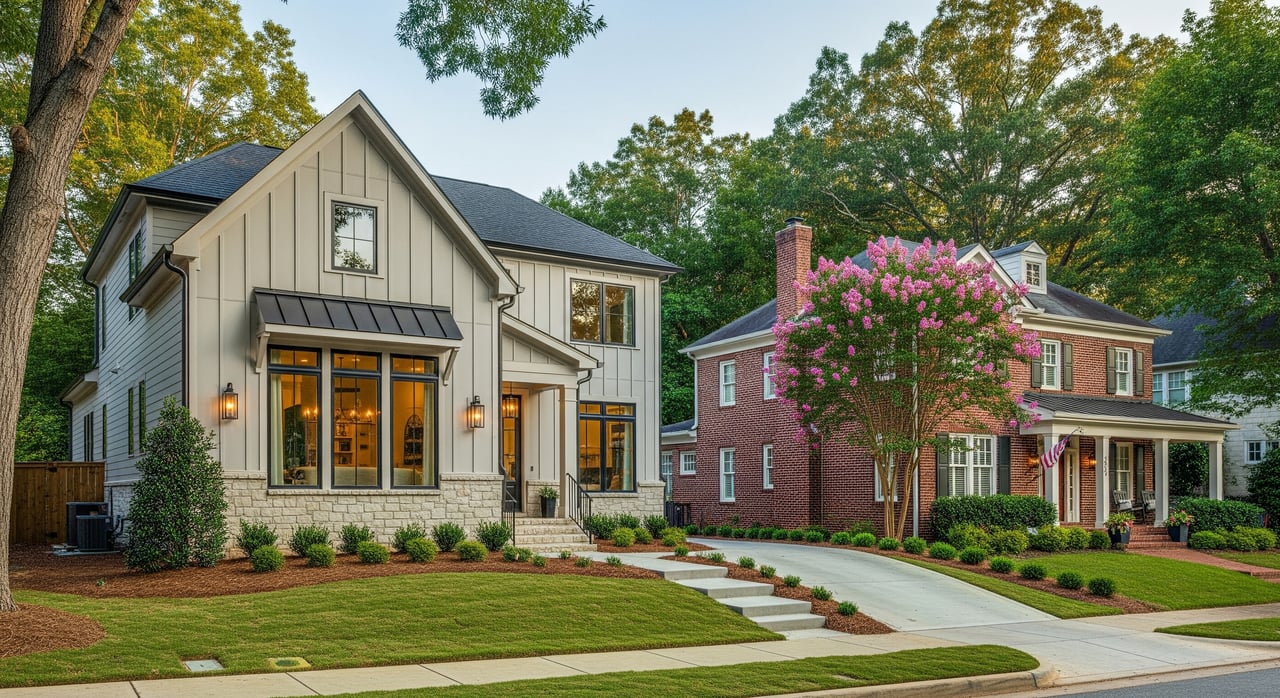
Trying to decide between a brand-new build and a resale home in Suwanee? You are not alone. Many buyers love the idea of modern finishes and warranties, while others want mature neighborhoods with quicker move-in timelines. In this guide, you will learn the key differences, what to look for in contracts and inspections, and how to align your choice with your timeline and budget. Let’s dive in.
New vs resale in Suwanee at a glance
Suwanee sits in Gwinnett County, where you will find a mix of established neighborhoods and new master-planned communities. New construction gives you customization and brand-new systems. Resales often deliver faster closings and mature surroundings. The right fit depends on your move-in date, financing plan, and the lifestyle you want.
Timeline and move-in speed
Resale timelines
Resale homes commonly close in about 30 to 60 days once you go under contract. Your key milestones are inspection, appraisal, any repair negotiations, and closing. Timing can change based on lender speed, title work, and the seller’s move-out plan.
New construction timelines
New construction can range from a near-resale timeline to several months. If you choose a completed or nearly completed spec home, you may close on a schedule similar to resale. If you start from a lot and design selections, plan for several months. Build time varies with stage, builder backlog, upgrades, and supply conditions. Some buyers use a single-close construction-to-permanent loan to simplify financing, but the home still needs time to be built.
Why timeline matters
Your timing affects leases, existing home sale coordination, temporary housing, and exposure to interest-rate changes. If you need to move quickly, resale often wins. If you have flexibility and value customization, new construction is compelling.
Contracts, inspections, and warranties
How contracts differ
Resale contracts in Georgia typically follow forms used by local associations and include inspection contingencies, title timelines, and seller disclosures. Builder contracts are different. They often use builder-specific forms with unique deposits, change-order rules, and remedies for delays. Ask your buyer’s agent or a real estate attorney to review terms like deposit refundability, delivery timelines, and liquidated damages. Get every promise in writing.
What inspections to expect
For resales, you can usually complete full home inspections along with specialized checks like pest, roof, HVAC, foundation, or sewer scope. Inspection scope is typically flexible during the contingency period.
For new construction, third-party inspections are often allowed at set stages. Common best practices include pre-pour or foundation checks, a framing or pre-drywall inspection, and a final inspection. Confirm the builder’s policy on access and timing for independent inspectors so you can schedule around construction milestones.
Understanding warranties
New homes commonly include written builder warranties. These often include a workmanship warranty for the first year, possible coverage for systems for one to two years, and a structural warranty that can extend longer. Terms vary by builder and warranty provider, so review coverage, exclusions, and the claim process in writing.
For resales, a home warranty may or may not be offered by the seller. You can purchase a plan after closing if you want added peace of mind. In all cases, confirm what is covered, what is considered maintenance, and how to file claims.
Price, incentives, and financing
How pricing works
New construction pricing typically starts with a base price, then adds lot premiums, structural options, and design upgrades. Model homes often feature upgrades that are not included in the base price, so request an itemized list of what you saw.
Resale pricing reflects location, condition, recent comparable sales, and seller motivations. Negotiation room depends on supply and demand. Your agent will help you understand comps so you can make a confident offer.
Incentives and concessions
Builders frequently offer incentives like closing cost help, lender credits, interest-rate buydowns, upgrade credits, or pricing adjustments on spec homes. Incentives can be time-limited and may require using a preferred lender or title company. Ask how incentives affect your appraisal and whether you have options with other lenders.
Resale sellers may offer concessions, but these are less predictable. Your leverage depends on the property and market conditions.
Financing paths
Resale homes are commonly financed with conventional, FHA, VA, USDA, or other loan products. Closing timelines depend on loan type and lender.
For new builds, you may choose a traditional construction loan that converts later to permanent financing or a single-close construction-to-permanent loan. Some builders partner with preferred lenders for streamlined processing and incentives. Compare rates, fees, and the total cost of any incentive to be sure you are getting true value.
Neighborhood and long-term fit
Amenities and HOA
New communities in Suwanee may open amenities in phases. Pools, trails, and clubhouses might arrive later, and HOA structures can shift as the community grows. Roads, landscaping, and buffers may be in progress for a while. Review covenants, conditions, and restrictions to understand assessments, maintenance, and amenity timelines.
Established neighborhoods often offer mature trees, finished amenities, and known traffic patterns. If you prefer immediate stability, resale can be attractive.
Schools and services
Suwanee is served by Gwinnett County Public Schools. School boundaries can change over time as new development comes online, so confirm current assignments and bus routes directly with the district. For any home, review commute options, proximity to parks and public services, and how future development could influence daily life.
Site and environmental notes
On new lots, grading, drainage, and stormwater control are critical. Newly cut lots can settle, so ask about drainage plans and erosion control. Many communities include stormwater retention features. Clarify who maintains these areas, such as the HOA or a public agency.
Local Suwanee and Gwinnett specifics to verify
- Permits and inspections: Gwinnett County Development and Environmental Services oversees building permits and stage inspections like footing, foundation, framing, mechanicals, insulation, and final. Ask your builder about expected inspection timing.
- Certificate of Occupancy: A CO is required before move-in for new construction. Confirm when your builder expects to receive it and whether a temporary CO is ever used.
- Property taxes and assessments: The Gwinnett County Tax Commissioner handles millage rates and assessments. New construction may be assessed differently after completion. Ask how and when your assessment may change.
- School boundaries: Check with Gwinnett County Public Schools for current boundary maps and capacity updates when comparing neighborhoods.
- Transportation: Major corridors such as I-85 and GA-316 shape commute times. Review current traffic patterns and any planned roadwork that could affect access.
Model-home and community tour checklist
Use this list to make the most of your visit. Bring your agent and register their representation when you arrive.
Pre-visit documents to request
- Community plan with amenity phasing
- Standard inclusion list and upgrade sheet
- Sample builder warranty document
- Sample purchase contract for the lot or plan you are considering
- Recent comparable sales in the community if available
On-site checks
- Lot and orientation: grade, drainage, tree buffers, distance to the next lot
- Community status: which amenities are complete, what is planned, and proximity to main roads or commercial areas
- Construction quality cues in the model: drywall finish, trim fit, door and window operation, cabinetry installation, floor transitions
- Mechanical layout: HVAC locations, vent distribution, utility access points
- Lighting and electrical: outlet and switch placement, options for smart wiring
- Storage and function: closet sizes, garage storage, attic access
- Sound and privacy: wall construction, exterior noise from nearby roads
Questions to ask the builder or sales agent
- What is included in the base price versus model upgrades? Can I get an itemized list?
- What is the exact timeline to completion for available lots or spec homes?
- What is the deposit schedule and refundability for lot reservations and contracts?
- Which third-party inspections are allowed and at what stages?
- What are the warranty terms, coverage limits, and claim process?
- Who performs warranty repairs and what are the response times?
- Are incentives tied to using a preferred lender or title company?
- What are HOA dues, what is covered, and are there expected special assessments?
- Have there been any recent lien or construction-defect claims in the community?
Post-visit follow-ups
- Itemized list of the model’s actual options and their costs
- Sample elevations and floor plans for your preferred layout
- Projected closing schedule and written next steps
- Contact information for the on-site construction manager and warranty coordinator
New vs resale: quick pros and cons
New construction pros
- Customization of finishes and features
- Modern design and energy-efficient systems
- Builder warranties for workmanship, systems, and structure
New construction cons
- Longer timelines if building from a lot
- Upgrades and lot premiums can raise the final price
- Amenities and HOA may be in early stages
Resale pros
- Faster move-in, often within 30 to 60 days
- Mature landscaping and established traffic patterns
- Ability to assess maintenance history and neighborhood character
Resale cons
- Fewer customization options without renovations
- Systems and components may be older
- Warranty coverage varies and may require a separate plan
Next steps with a local advocate
Your choice should match your timeline, financing, and long-term goals. If you want speed and known surroundings, resale may be the best fit. If you want modern design, warranties, and the latest layouts, new construction can be worth the wait.
Our team guides you through both paths, from builder contract reviews and staged inspections to resale negotiations and closing logistics. We speak English and Spanish, and we are here to help you compare options with clarity. If you are ready to tour Suwanee communities or want a second opinion on a contract or incentive offer, connect with the Echeverry Escobar Team.
FAQs
How long does it take to buy a resale home in Suwanee?
- Many resale purchases close in about 30 to 60 days after going under contract, depending on inspections, appraisal, lender timelines, and the seller’s move-out plan.
How long does a new construction purchase take if I am starting from a lot?
- Build times vary with stage, selections, and builder backlog, so plan for several months; confirm the schedule with the builder and your lender early.
Can I hire my own inspector for a new build in Suwanee?
- Often yes, but access is typically staged; ask the builder which third-party inspections are allowed and coordinate around foundation, framing, and final stages.
What does a builder warranty usually cover on a new home?
- Coverage commonly includes a workmanship period, limited systems coverage, and a longer structural component; review the written warranty for exact terms and exclusions.
Do builder incentives require using a preferred lender?
- Many incentives do; request the incentive sheet, compare rates and fees with outside lenders, and confirm how incentives affect your appraisal and closing costs.
What should I review in a new community’s HOA documents?
- Check dues, what they cover, amenity completion timelines, maintenance responsibilities, and whether special assessments are planned or possible.
Who represents me when I visit a model home?
- The on-site agent typically represents the builder; bring your buyer’s agent and register their representation at the first visit so your interests are protected.